
Why Some Men Prefer Short-Term Relationships: The Freedom, Fun, and Fear of Commitment
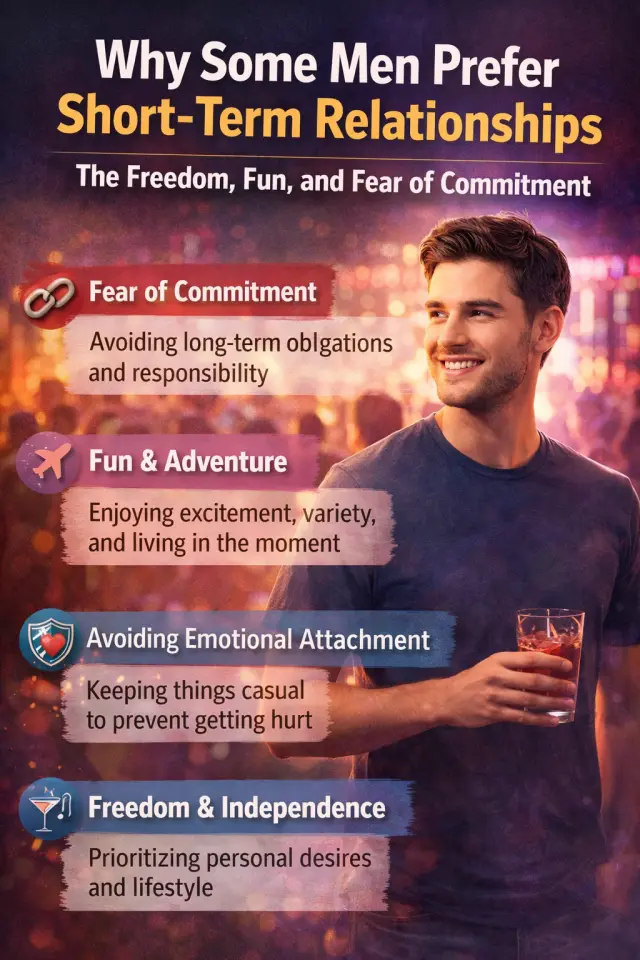
Fear of Commitment: Exploring how some men may feel restricted by the concept of long-term commitments and prefer the freedom that comes with casual relationships.
Avoiding Emotional Investment: Many men may avoid long-term relationships because they are afraid of emotional vulnerability and the deep attachment that comes with them.
Desire for Fun and Adventure: Short-term relationships can often be more about having fun, exploring new connections, and living in the moment, without the weight of future planning.
Cultural and Societal Expectations: There may be societal pressures or cultural expectations that push men toward casual dating as the “norm” or as a phase of life they’re expected to go through.
Independence and Control: Some men prefer the independence and flexibility that comes with short-term relationships, as they don’t require them to compromise their personal goals, routines, or autonomy.
In today’s dating world, the dynamics of relationships have evolved, with an increasing number of people opting for short-term, casual relationships instead of long-term commitments. While many women may be looking for lasting partnerships, a significant number of men seem to favor the excitement and freedom of short-term relationships. This phenomenon has raised questions about emotional maturity, societal pressures, and changing relationship expectations. But why do some men prefer short-term relationships? Let’s explore the factors behind this choice, from the desire for freedom and fun to the fear of commitment and emotional vulnerability.
1. The Allure of Freedom and Independence
One of the most compelling reasons why some men prefer short-term relationships is the freedom that comes with them. In a long-term relationship or marriage, individuals often find themselves having to make compromises, juggle responsibilities, and consider the needs of their partner in every decision. This can feel like a loss of independence, especially for those who value personal space and autonomy. Freedom of Choice: Short-term relationships often allow men to maintain a sense of independence. They don’t have to worry about long-term obligations or the pressure of making decisions that affect their partner’s future. They are free to pursue their personal goals, hobbies, and interests without feeling guilty or restricted. Less Emotional Investment: In a casual relationship, the stakes are lower. Men don’t have to invest as much emotionally, which means less pressure to prioritize their partner’s needs over their own. The relationship exists in the moment, with little concern for the future. For men who are still figuring out their career paths, personal ambitions, or life goals, the flexibility offered by short-term relationships can be an appealing alternative to the more structured and commitment-heavy nature of long-term partnerships.2. The Fun and Adventure of Casual Dating
Short-term relationships often come with a sense of excitement and adventure. There is an element of novelty in meeting new people, exploring different dynamics, and experiencing new things. For some men, this is the most attractive aspect of dating. Exploration and Variety: Casual dating offers the opportunity to explore different personalities, lifestyles, and experiences without the emotional weight of a serious commitment. For some men, the thrill of meeting someone new, going on spontaneous dates, and sharing temporary, exciting moments can be more appealing than the predictability of a long-term relationship. Romantic Freedom: In short-term relationships, men are often free to enjoy the honeymoon phase of romance over and over again. Without the responsibility of maintaining a long-term partnership, they can focus on enjoying the moment, whether it’s a weekend getaway, an adventurous date, or simply enjoying the chemistry with someone new. The sense of adventure that comes with casual dating can be particularly appealing to younger men or those in their 20s and 30s, who may feel that they have time to explore their romantic options before settling down.3. Fear of Commitment: A Reluctance to Settle Down
Perhaps one of the most significant reasons some men prefer short-term relationships is the fear of commitment. For many men, the idea of locking themselves into a long-term partnership can be intimidating. The fear of giving up their freedom, losing their sense of self, or becoming emotionally tied to someone else is enough to make the prospect of a serious relationship seem daunting. Fear of Losing Identity: Commitment often means blending two lives together, and for some men, that might feel like a loss of their personal identity. In long-term relationships, people are expected to make compromises, sometimes to the point where their own desires and needs take a backseat to those of their partner. For men who value their personal space and individuality, this can feel like a sacrifice they’re not ready to make. Fear of Emotional Vulnerability: Long-term relationships require emotional intimacy and the willingness to be vulnerable. Many men may find it difficult to open up and share their feelings, particularly if they have experienced past heartbreak or if they’ve been socialized to believe that emotional vulnerability is a weakness. The prospect of deep emotional connection, while rewarding, can also feel risky. Fear of Future Responsibility: In a long-term relationship, especially one that leads to marriage, there are a lot of responsibilities to consider—financial planning, raising children, managing a household, and more. Some men may fear the weight of these commitments and the potential for future failure, leading them to prefer the lighter responsibilities that come with casual dating. For these reasons, some men avoid long-term relationships altogether, preferring the lighter, less demanding nature of short-term relationships.4. Avoiding the Pressure of Societal Expectations
Society often places significant pressure on people to conform to traditional relationship norms, especially regarding marriage and family life. Many men feel that societal expectations—such as the pressure to settle down, buy a house, and start a family—are too overwhelming. The idea of living up to these expectations can drive men to avoid long-term relationships altogether. Cultural Expectations: In many cultures, there is a defined path for men—graduate, find a career, get married, and start a family. While these expectations may be valid for some, they can be limiting for others. Men who feel that they’re not ready to settle down or who are unsure about their future may resist the pressure to commit to a long-term relationship. Fear of Judgment: Men who choose short-term relationships may also do so to avoid the judgment of their peers, family, or society. Some men might be hesitant to settle down because they fear being judged for not meeting societal standards of maturity or success. Casual relationships allow them to avoid these societal pressures while still engaging in romantic or sexual experiences. Short-term relationships, in this sense, offer men the opportunity to escape the expectations placed upon them and focus on enjoying life as they see fit, without having to answer to anyone.5. Self-Discovery and Personal Growth
Some men prefer short-term relationships because they are still in the process of self-discovery and personal growth. The flexibility and freedom offered by these relationships can allow them the space to focus on their own development, whether it’s career-wise, emotionally, or socially. Time for Reflection: Short-term relationships often don’t require the level of commitment and sacrifice that long-term relationships do. This means men have more time to reflect on their needs, desires, and aspirations. Without the demands of a serious partnership, they can focus on achieving their personal goals and becoming the best version of themselves. Exploring Different Lifestyles: Being in short-term relationships offers men the opportunity to explore different lifestyles, values, and perspectives. Each new relationship presents a chance to learn more about what they want from life and relationships, without the pressure of making long-term decisions. For men who are still figuring out who they are, what they want, or where they want to be in the future, short-term relationships may provide the space they need for personal growth.Conclusion: A Personal Choice in the Modern Dating World
Ultimately, the preference for short-term relationships is a deeply personal one, influenced by a variety of factors such as freedom, fun, emotional maturity, societal expectations, and personal goals. While some men enjoy the stability and depth of long-term relationships, others may feel that short-term dating offers the flexibility and excitement they need at this point in their lives. As dating norms continue to evolve, it’s essential to understand that people’s choices regarding relationships—whether short-term or long-term—are not always indicative of their ability to commit or their emotional depth. Instead, they reflect the complex balance between personal desires, societal expectations, and emotional readiness. In a world where relationship expectations are constantly shifting, it’s important for individuals to feel comfortable with their own choices, whether they’re looking for a short-term fling or a lifelong partnership. The key is to communicate openly and honestly, ensuring that everyone’s needs are met, regardless of the duration of the relationship.Published on 13/01/2026